Crop diseases remain one of the biggest challenges in modern agriculture. Every year, fungal and bacterial pathogens cause significant yield losses worldwide, affecting both food security and farm profitability. While many farmers focus on factors such as temperature, rainfall, and soil conditions, one critical environmental parameter is often overlooked: leaf wetness.
Leaf wetness refers to the presence and duration of water on plant leaf surfaces. Moisture can accumulate on leaves due to rainfall, irrigation, fog, or morning dew. When leaves remain wet for extended periods, they create ideal conditions for the development and spread of plant pathogens. Many fungal diseases require a specific duration of leaf moisture before spores can germinate and infect plant tissues.
By monitoring leaf wetness in real time, farmers and agricultural professionals can better understand field microclimates and predict potential disease outbreaks before they occur. With the help of modern leaf wetness sensors and environmental monitoring systems, growers can make more informed decisions about irrigation, pesticide applications, and crop protection strategies.
As agriculture continues to adopt precision farming technologies, leaf wetness monitoring has become an essential tool for effective crop disease prediction and management.
Plant diseases often depend on a combination of environmental conditions, including temperature, humidity, and moisture availability. Among these factors, leaf wetness duration plays a key role in determining whether pathogens can successfully infect crops.
Fungal pathogens, in particular, rely heavily on moisture. Many fungal spores require a film of water on the leaf surface to germinate. Once germination begins, the pathogen can penetrate the plant tissue and start developing an infection.
Several well-known plant diseases are strongly influenced by leaf wetness duration, including:
Powdery mildew
Downy mildew
Late blight
Early blight
Gray mold (Botrytis)
Leaf spot diseases
For these pathogens, even a few hours of moisture on leaves can significantly increase infection risk. The longer the leaves remain wet, the higher the probability that disease development will occur.
Leaf wetness can occur under several conditions:
Rainfall events
Overhead irrigation
High humidity and condensation
Morning dew formation
Fog or mist in humid environments
Because these conditions are common in agricultural fields and greenhouses, monitoring leaf wetness becomes essential for predicting disease risks.
Leaf wetness monitoring involves measuring the presence and duration of moisture on plant leaves. This is typically achieved using specialized sensors designed to simulate the surface of a natural leaf.
These sensors detect moisture through changes in electrical conductivity or surface resistance when water accumulates on the sensor plate. When the sensor surface becomes wet, it records the duration and intensity of the moisture event.
Leaf wetness sensors are usually installed in crop fields, orchards, vineyards, or greenhouses at canopy level, where they can accurately represent the microclimate surrounding plant leaves.
Modern leaf wetness monitoring systems often work together with other environmental sensors, including:
Air temperature sensors
Relative humidity sensors
Solar radiation sensors
By combining these parameters, farmers can obtain a comprehensive view of environmental conditions that influence plant disease development.
Leaf wetness duration is one of the most important indicators used in plant disease forecasting models. Many agricultural disease prediction systems rely on environmental thresholds that combine temperature and leaf wetness data.
For example, certain fungal diseases may require:
A minimum number of hours of leaf wetness
A specific temperature range
High relative humidity levels
When these conditions occur simultaneously, the risk of infection increases significantly.
Disease forecasting models analyze these conditions to estimate the probability of disease outbreaks. By collecting accurate leaf wetness data, farmers can determine when environmental conditions are favorable for pathogen development.
This information allows growers to take preventive actions before disease spreads across the field.
Leaf wetness monitoring is particularly valuable for crops that are highly susceptible to fungal diseases. Many high-value crops rely on precise environmental management to prevent infections and maintain product quality.
Grape vineyards are highly vulnerable to diseases such as downy mildew, powdery mildew, and Botrytis bunch rot. These diseases often develop under conditions of prolonged leaf wetness combined with warm temperatures.
By monitoring leaf wetness, vineyard managers can better predict infection periods and apply fungicides only when necessary.
Tomato crops are susceptible to several moisture-related diseases, including early blight and late blight. These diseases can spread rapidly during periods of extended leaf moisture.
Leaf wetness monitoring helps tomato growers determine when environmental conditions are favorable for disease development and adjust irrigation practices accordingly.
Strawberries are particularly sensitive to gray mold, also known as Botrytis. This fungal disease thrives in humid environments where leaves and fruits remain wet for long periods.
Monitoring leaf wetness duration helps farmers identify high-risk periods and implement disease control measures.
Potato crops are commonly affected by late blight, one of the most destructive plant diseases worldwide. The disease spreads quickly in cool and wet conditions.
Accurate leaf wetness data helps predict blight outbreaks and supports more effective crop protection strategies.
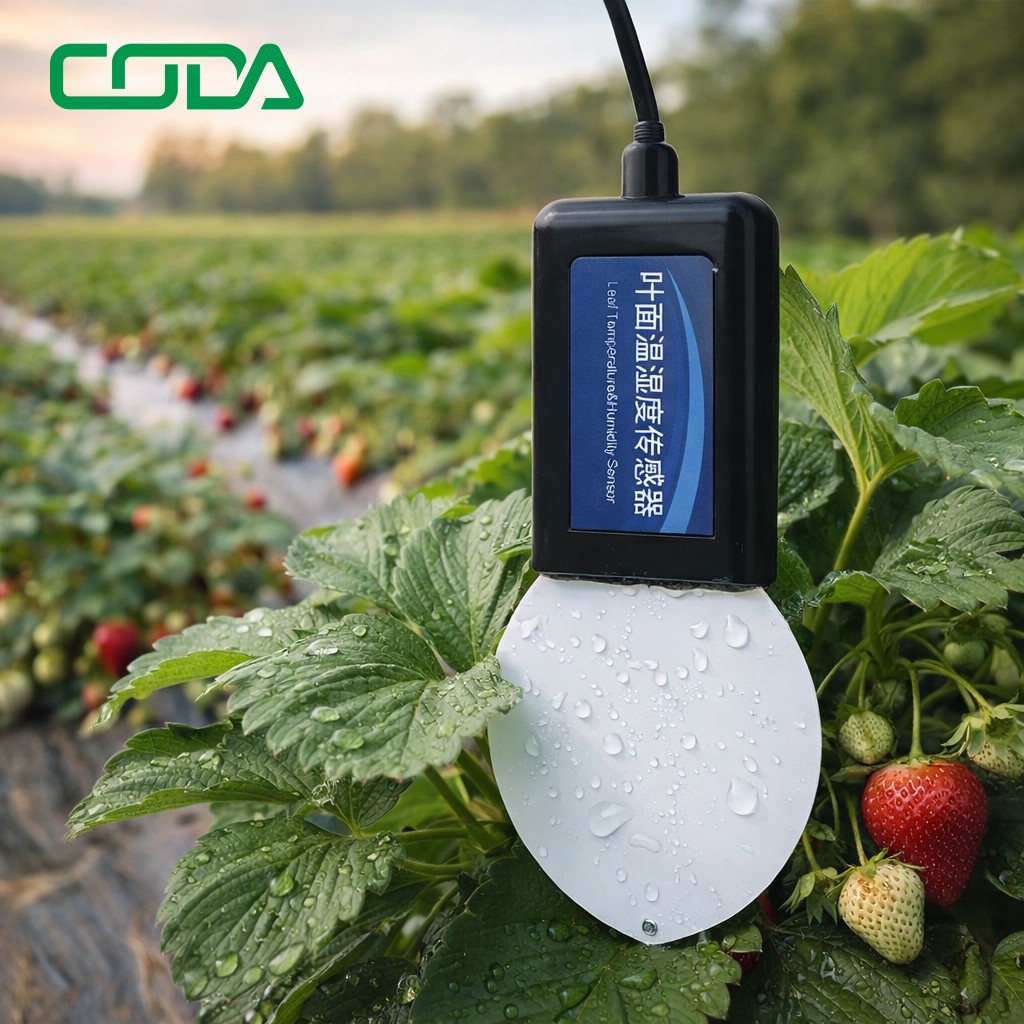
Leaf wetness monitoring allows farmers to detect conditions favorable for plant diseases before symptoms appear. Early detection helps reduce crop losses and improve overall farm productivity.
Traditional disease management often relies on fixed pesticide application schedules. However, spraying crops without considering environmental conditions can lead to unnecessary chemical use.
With leaf wetness monitoring, farmers can apply fungicides only when infection risk is high. This reduces chemical costs and minimizes environmental impact.
Overhead irrigation can increase leaf wetness duration, which may promote fungal infections. By monitoring leaf moisture levels, farmers can adjust irrigation schedules to avoid prolonged wet conditions.
By preventing disease outbreaks, farmers can maintain higher crop quality and improve market value. Healthy plants also produce higher yields and more consistent harvests.
Leaf wetness monitoring contributes to precision agriculture by providing real-time environmental data. This data helps farmers make informed decisions about crop protection, irrigation, and field management.
Modern agriculture is rapidly adopting Internet of Things (IoT) technologies to improve efficiency and sustainability. Environmental sensors now play a central role in monitoring field conditions and supporting automated farm management systems.
Leaf wetness sensors can be integrated into smart agriculture platforms that collect and analyze data from multiple sensors across the farm.
These systems allow farmers to:
Monitor environmental conditions remotely
Receive real-time alerts when disease risk increases
Analyze historical climate data
Improve long-term crop management strategies
Cloud-based platforms and wireless communication technologies also make it easier to monitor multiple fields or greenhouses from a single dashboard.
As precision agriculture continues to evolve, leaf wetness monitoring will become increasingly important for optimizing crop health and reducing disease risks.
Advances in sensor technology, data analytics, and artificial intelligence are transforming how farmers manage crop diseases. Modern agricultural monitoring systems can now analyze environmental data in real time and provide predictive insights for disease outbreaks.
Future developments may include:
AI-based disease prediction models
Integrated climate monitoring networks
Automated crop protection systems
Advanced environmental sensors with higher accuracy
By combining these technologies with leaf wetness monitoring, farmers will be able to manage crop diseases more efficiently while reducing chemical inputs and environmental impact.
Leaf wetness is a critical environmental factor that directly influences the development and spread of many plant diseases. Monitoring the duration and intensity of moisture on leaf surfaces provides valuable insights into crop microclimates and infection risks.
With the help of modern leaf wetness sensors and integrated environmental monitoring systems, farmers can detect high-risk conditions earlier, apply crop protection measures more effectively, and reduce unnecessary pesticide use.
As agriculture continues to move toward data-driven farming practices, leaf wetness monitoring will remain an essential component of crop disease prediction and precision agriculture strategies.
By understanding and managing this important environmental parameter, growers can protect crop health, improve yields, and support more sustainable agricultural production.
What are the uses of a rain gauge? Learn how rai
Learn how PAR sensors measure PPFD, optimize gro
Learn how soil EC sensors help optimize fertiliz
Contact: Molly
Phone: +86-17775769236
Tel: 86-0731-85117089
Email: molly@codasensor.com
Add: Building S5, Aux Square, Yuelu District, Changsha City, Hunan Province, China
We chat






 English


