Introduction
Flooding is one of the most destructive natural disasters worldwide, causing significant damage to infrastructure, agriculture, and human life every year. With climate change intensifying extreme weather events, the demand for accurate, real-time flood monitoring systems has never been greater. Traditional weather stations, while essential for measuring atmospheric conditions such as rainfall, temperature, humidity, and pressure, often fall short when it comes to providing a complete picture of flood risk.
This is where water level sensors play a crucial role. By integrating water level monitoring into weather station systems, organizations can significantly improve the accuracy, reliability, and responsiveness of flood prediction and early warning systems.
In this article, we explore how water level sensors enhance weather station performance, the technologies behind them, and their applications in modern flood monitoring systems.
Flood monitoring systems are designed to detect, measure, and predict water-related hazards in real time. These systems typically combine multiple data sources, including:
Atmospheric pressure
Temperature and humidity
River or reservoir water levels
Soil moisture conditions
Weather stations traditionally handle atmospheric data collection. However, flooding is not determined by rainfall alone. Two regions with identical rainfall can experience very different flood outcomes depending on terrain, drainage, and existing water levels.
Without direct measurement of water bodies, weather stations provide only partial insight. Integrating water level sensors bridges this gap, enabling a more comprehensive and actionable monitoring system.
Water level sensors are devices used to measure the height of a liquid surface relative to a reference point. In flood monitoring, they are typically installed in:
Rivers and streams
Reservoirs and dams
Urban drainage systems
Coastal areas
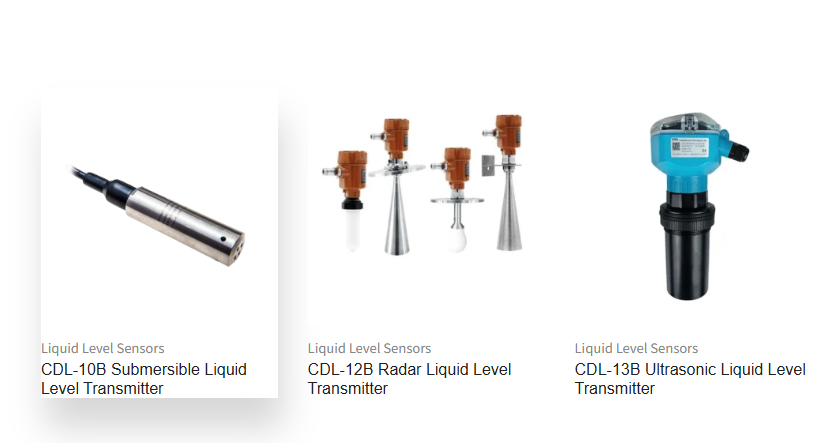
There are several types of water level sensors commonly used in environmental monitoring:
These sensors use sound waves to measure the distance between the sensor and the water surface. They are non-contact, making them ideal for harsh or contaminated environments.
Radar sensors use electromagnetic waves and offer higher accuracy and stability, especially in extreme weather conditions such as heavy rain or fog.
These sensors measure the pressure exerted by the water column above them. They are typically submerged and provide highly accurate readings.
A more traditional method, float sensors rise and fall with water levels. While simple, they are less suitable for modern automated systems.
Each type has its advantages, but all serve the same purpose: providing real-time data on water level changes.
Weather stations are the backbone of environmental monitoring systems. They collect key meteorological data such as:
Rainfall (via rain gauges)
Wind speed and direction
Temperature and humidity
Barometric pressure
This data is essential for understanding weather patterns and predicting potential flood events. For example, prolonged heavy rainfall combined with saturated soil can indicate a high risk of flooding.
However, weather stations alone cannot confirm whether flooding is actually occurring. They can only estimate risk based on atmospheric conditions.
Water level sensors provide direct measurements of water bodies, offering real-time confirmation of flood conditions. This “ground truth” data is critical for validating predictions made by weather stations.
For example, a weather station may detect heavy rainfall, but without water level data, it cannot determine whether a river is nearing overflow. By combining both data sources, monitoring systems become far more accurate.
Modern flood prediction relies heavily on data modeling and simulation. These models require accurate input data to produce reliable forecasts.
By integrating water level data with meteorological data, models can:
Better estimate runoff and river flow
Identify flood thresholds more precisely
Reduce false alarms
This leads to more reliable early warning systems and improved decision-making.
One of the most important benefits of water level sensors is their ability to trigger early warnings. When water levels rise beyond predefined thresholds, alerts can be automatically sent to authorities and communities.
When combined with weather station data, these alerts become more context-aware. For example:
Rising water levels + ongoing rainfall = escalating flood risk
Stable water levels + reduced rainfall = decreasing risk
This enables faster and more informed responses, potentially saving lives and reducing damage.
Flood events are influenced by multiple factors, including rainfall, terrain, and drainage capacity. By correlating weather data with water level data, analysts can gain deeper insights into how these factors interact.
This is particularly useful for:
Identifying flood-prone areas
Optimizing infrastructure planning
Improving long-term disaster preparedness
False flood warnings can lead to unnecessary evacuations and reduced public trust in monitoring systems. By incorporating water level data, systems can verify whether predicted flooding is actually occurring.
This significantly reduces false positives and ensures that alerts are issued only when necessary.
Modern monitoring systems use IoT (Internet of Things) technology to integrate various sensors into a unified platform. A typical system includes:
Weather station sensors (rainfall, wind, temperature)
Water level sensors (river, drainage, reservoir)
Data loggers and communication modules
Cloud-based monitoring software
Data is transmitted in real time via:
GSM/4G/5G networks
LoRaWAN
Satellite communication
This allows users to access live data, historical trends, and automated alerts from anywhere in the world.
Water level sensors installed along rivers provide continuous data on water levels. When combined with upstream rainfall data from weather stations, authorities can predict downstream flooding with greater accuracy.
In cities, flooding is often caused by inadequate drainage systems. Water level sensors placed in storm drains and canals help monitor water accumulation in real time.
Weather stations provide rainfall intensity data, enabling city planners to assess whether drainage systems are functioning effectively.
Water level monitoring is critical for dam safety. Sensors help track reservoir levels, while weather stations provide data on incoming rainfall.
This allows operators to make informed decisions about water release, preventing overflow and downstream flooding.
In coastal areas, flooding can result from storm surges and rising sea levels. Water level sensors measure tidal changes, while weather stations monitor wind speed and atmospheric pressure.
Together, they provide a comprehensive view of coastal flood risks.
Flooding can devastate crops and farmland. By integrating water level sensors with weather stations, farmers can monitor field conditions and take preventive measures.
This is particularly valuable in regions prone to seasonal flooding.
When selecting water level sensors for integration with weather stations, consider the following factors:
Accuracy and resolution
Measurement range
Environmental resistance (IP rating)
Communication compatibility (RS485, SDI-12, etc.)
Power consumption (important for remote deployments)
Ease of installation and maintenance
Choosing the right sensor ensures reliable performance and long-term system stability.
The integration of water level sensors and weather stations is evolving rapidly, driven by advancements in technology:
AI algorithms can analyze large datasets to improve flood prediction accuracy and identify patterns that humans may miss.
Satellite imagery is increasingly being combined with ground-based sensors for comprehensive monitoring.
As cities become smarter, integrated monitoring systems will play a key role in urban resilience and disaster management.
Processing data closer to the source reduces latency and enables faster decision-making in critical situations.
Water level sensors are no longer optional components in flood monitoring systems—they are essential. By providing real-time, ground-level data, they significantly enhance the accuracy and effectiveness of weather stations.
The integration of these technologies enables:
More reliable flood predictions
Faster and more accurate early warnings
Better infrastructure planning
Reduced risk to life and property
As climate challenges continue to grow, investing in advanced monitoring systems that combine weather stations with water level sensors is not just a technological upgrade—it is a necessity.
What are the uses of a rain gauge? Learn how rai
Learn how PAR sensors measure PPFD, optimize gro
Learn how soil EC sensors help optimize fertiliz
Contact: Molly
Phone: +86-17775769236
Tel: 86-0731-85117089
Email: molly@codasensor.com
Add: Building S5, Aux Square, Yuelu District, Changsha City, Hunan Province, China
We chat






 English


