Wind is one of the most underestimated environmental factors in both daily life and industrial applications. While temperature, rainfall, and humidity often receive more attention, wind speed plays a critical role in shaping weather patterns, influencing ecosystems, and affecting the performance of various systems—from agriculture to renewable energy.
Many people assume that wind is only relevant during storms or extreme weather events. However, even moderate variations in wind speed can significantly impact crop growth, air quality, structural safety, and energy efficiency. In reality, wind speed is not just a background variable—it is a key driver of environmental dynamics.
This article explores why wind speed matters more than you think, how it affects different industries, and why accurate wind speed monitoring is essential for smarter decision-making.
Wind speed refers to how fast air is moving from one location to another. It is typically measured in meters per second (m/s), kilometers per hour (km/h), or miles per hour (mph). The most common instrument used to measure wind speed is an anemometer.
Wind is generated by differences in atmospheric pressure, which are primarily caused by uneven heating of the Earth's surface. These pressure differences create air movement, resulting in wind patterns that vary in intensity and direction.
Even slight changes in wind speed can alter evaporation rates, heat distribution, and pollutant dispersion. This makes wind speed a crucial parameter in environmental monitoring systems.
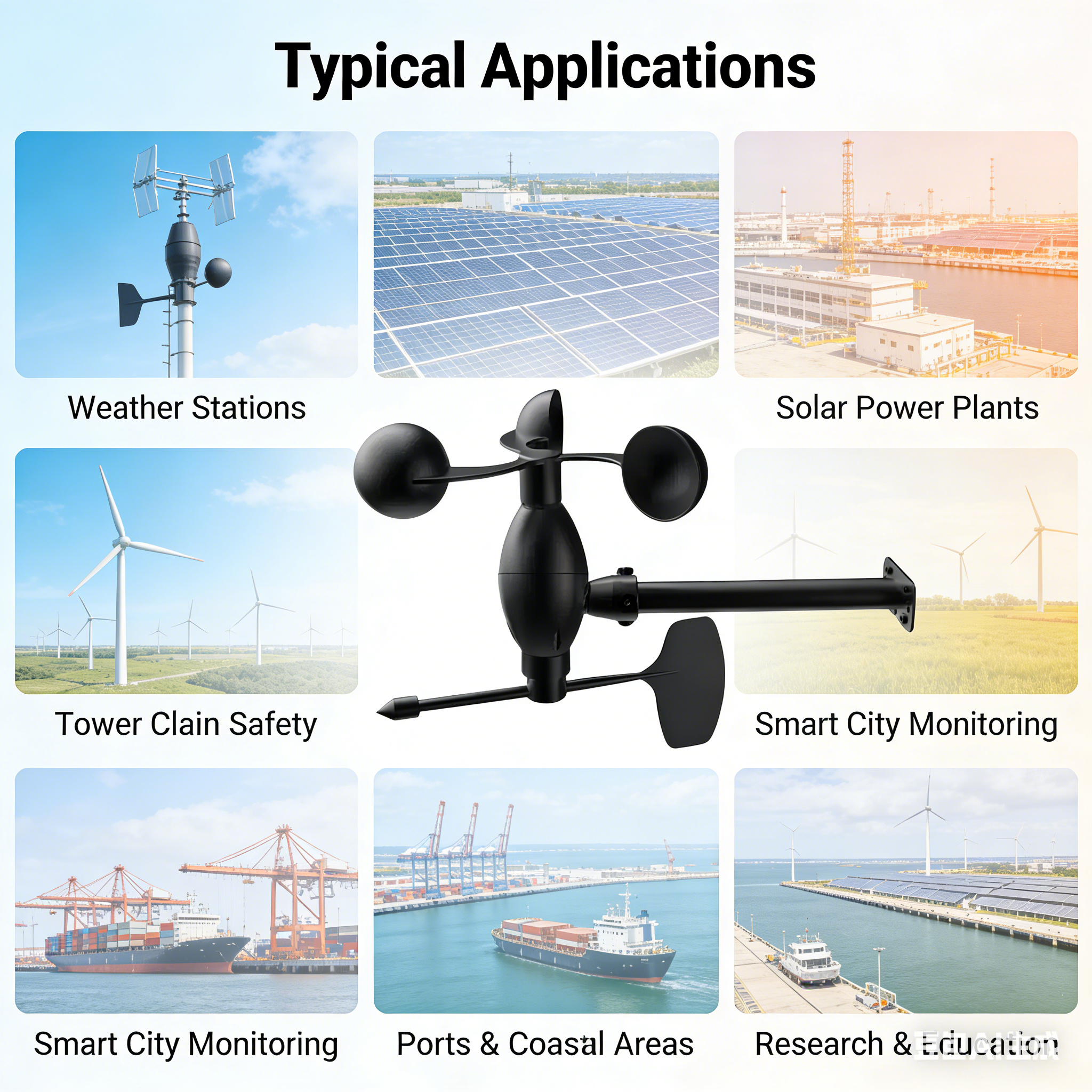
Wind speed is a fundamental component of weather systems. It influences how heat and moisture move across regions, directly affecting temperature, cloud formation, and precipitation.
Wind helps redistribute heat from the equator toward the poles. Without wind, many regions would experience extreme temperature differences, making large parts of the planet less habitable.
High wind speeds are often associated with storms, hurricanes, and cyclones. Monitoring wind speed allows meteorologists to predict the intensity and movement of these events, enabling early warnings and disaster preparedness.
On a smaller scale, wind speed affects local climates. For example, coastal areas often experience cooling effects due to sea breezes, while urban areas may have reduced wind flow due to buildings.
In modern agriculture, wind speed is a critical factor that directly impacts crop health and productivity.
Wind accelerates the evaporation of water from soil and plant surfaces. High wind speeds can lead to excessive water loss, increasing irrigation demands.
Strong winds can physically damage crops by breaking stems, uprooting plants, or causing lodging (when crops fall over). Even moderate winds can stress plants and reduce yield.
Wind speed determines how pesticides and fertilizers are distributed. If the wind is too strong, chemicals may drift away from the target area, leading to inefficiency and environmental contamination.
Wind plays a vital role in the pollination of certain crops such as wheat and corn. Optimal wind conditions can improve pollination rates and increase yields.
For precision agriculture, integrating wind speed data with soil and weather sensors enables farmers to make smarter irrigation and spraying decisions.
Wind speed is one of the most important factors in renewable energy, particularly in wind and solar power systems.
The power generated by a wind turbine is directly proportional to the cube of wind speed. This means that even a small increase in wind speed can significantly boost energy output.
Accurate wind speed monitoring is essential for site selection, turbine placement, and performance optimization in wind farms.
Wind also affects solar energy systems. Moderate wind can cool solar panels, improving their efficiency. However, high wind speeds can cause mechanical stress and potential damage.
In systems that combine solar and wind energy, wind speed data helps balance energy production and improve overall system reliability.
Wind plays a crucial role in the dispersion of air pollutants.
Higher wind speeds help dilute and disperse pollutants, improving air quality. Conversely, low wind conditions can trap pollutants, leading to smog and health hazards.
In cities, buildings can block airflow, creating zones with poor ventilation. Monitoring wind speed helps urban planners design better ventilation corridors.
Factories rely on wind data to model how emissions spread in the environment. This is essential for regulatory compliance and environmental protection.
Wind speed is a key consideration in engineering and construction.
Structures must be designed to withstand local wind conditions. High-rise buildings, bridges, and towers are especially sensitive to wind loads.
In construction sites, especially those involving tower cranes, wind speed monitoring is critical. Excessive wind can destabilize cranes and pose serious safety risks.
Wind affects vehicles, particularly high-profile ones like trucks and buses. Strong crosswinds can lead to accidents, especially on bridges and open highways.
As cities become smarter, wind speed data is increasingly integrated into urban management systems.
Smart cities use sensor networks to monitor environmental parameters, including wind speed, in real time.
Early detection of high wind speeds allows authorities to issue warnings and take preventive measures.
Wind data helps optimize heating, ventilation, and air conditioning (HVAC) systems, improving energy efficiency in buildings.
Given its wide-ranging impact, accurate wind speed measurement is essential.
High Precision Sensors: Ensure reliable data collection
Real-Time Data Transmission: Enable immediate decision-making
Durability: Withstand harsh environmental conditions
Integration Capability: Work seamlessly with other environmental sensors
Modern wind speed sensors, such as ultrasonic and cup anemometers, provide high accuracy and low maintenance, making them ideal for various applications.
Despite its importance, measuring wind speed accurately can be challenging.
Obstacles like buildings and trees can distort wind measurements.
Incorrect placement can lead to inaccurate data. Sensors should be installed at standardized heights and in open areas.
Raw wind speed data must be analyzed in context with other environmental parameters to provide meaningful insights.
The future of wind speed monitoring is driven by advancements in technology.
Wind sensors are increasingly connected to IoT platforms, enabling remote monitoring and data analytics.
Artificial intelligence can analyze wind patterns to predict future conditions and optimize operations.
Integrated sensor systems provide a comprehensive view of environmental conditions, improving decision-making across industries.
Wind speed is far more than a simple weather parameter—it is a critical factor that influences agriculture, energy production, air quality, structural safety, and urban planning. Ignoring wind speed can lead to inefficiencies, increased risks, and missed opportunities.
By investing in accurate wind speed monitoring and integrating it into decision-making processes, industries can enhance performance, reduce risks, and move toward more sustainable and intelligent operations.
In a world increasingly driven by data, understanding and leveraging wind speed is not just beneficial—it is essential.
What are the uses of a rain gauge? Learn how rai
Learn how PAR sensors measure PPFD, optimize gro
Learn how soil EC sensors help optimize fertiliz
Contact: Molly
Phone: +86-17775769236
Tel: 86-0731-85117089
Email: molly@codasensor.com
Add: Building S5, Aux Square, Yuelu District, Changsha City, Hunan Province, China
We chat






 English


