The primary goal of any solar power plant is simple but uncompromising: maximize energy yield while protecting long-term financial return. For solar project developers, plant managers, and solar farm O&M teams, every fractional percentage of lost output directly impacts revenue, PPA compliance, and investor confidence.
Yet photovoltaic (PV) systems operate in an inherently variable environment. Sunlight intensity fluctuates by the minute due to cloud cover, atmospheric conditions, seasonal angles, dust, and shading. Environmental factors such as temperature, wind, and soiling further complicate performance assessment.
This leads to a central operational challenge:
How can operators move from reactive maintenance—responding only after losses occur—to proactive, data-driven photovoltaic efficiency optimization?
The answer starts with measurement. Specifically, it starts with the pyranometer—the ground-truth sensor that underpins all credible solar power plant monitoring strategies.
A pyranometer is a scientific instrument designed to accurately measure global horizontal irradiance (GHI)—the total solar radiation received per unit area. Without precise irradiance data, even the most advanced PV monitoring software is effectively guessing.
Irradiance is the single most critical input variable in any PV energy generation model. Simply put, no irradiance data means no meaningful performance benchmark.
Modern PV monitoring systems continuously compare actual power output against expected output. That expected output is derived from irradiance measurements combined with system design parameters such as module efficiency, orientation, and temperature coefficients.
High-accuracy pyranometers enable:
Real-time baselining of expected generation
Short-term forecasting under changing sky conditions
Immediate detection of abnormal deviations
Without this baseline, operators cannot reliably determine whether underperformance is weather-driven or system-driven.
Precise irradiance data is essential for calculating industry-standard KPIs used in solar farm O&M:
Performance Ratio (PR)
Conceptually:
PR = Actual Energy Output / (Irradiance × Modeled System Output)
PR normalizes production against available sunlight, making it the most reliable indicator of system health across seasons and locations.
Capacity Utilization Factor (CUF)
CUF reflects how effectively a plant converts available solar resource into usable energy over time—again, irradiance is the reference input.
Inaccurate irradiance measurements directly distort these metrics, leading to false alarms—or worse, missed faults.
A pyranometer allows operators to distinguish between:
Irradiance-related losses
Clouds, haze, seasonal solar angle changes
System-related losses
Inverter faults, string outages, degradation, soiling loss, or cabling issues
This separation is foundational for credible root-cause analysis and defensible reporting to stakeholders.
Many utility-scale plants rely on a single, centrally located pyranometer. While adequate for small or flat sites, this approach introduces significant error for large, complex installations.
Terrain variation, row spacing, nearby structures, and vegetation growth can cause spatially uneven irradiance, which a single sensor cannot represent accurately.
Plant characteristics:
Installed capacity: 50 MW
Rolling terrain with elevation changes
Seasonal vegetation causing partial shading in specific zones
Problem:
A single central pyranometer consistently overestimates irradiance for shaded sections. As a result:
String-level underperformance goes undetected
PR appears acceptable at plant level
Localized energy yield losses accumulate silently
By installing multiple pyranometers across representative zones of the plant:
Irradiance is measured where energy is actually produced
Each zone receives its own accurate performance baseline
Data can be correlated with inverter and string outputs
With spatially resolved irradiance data, operators can:
Identify underperforming zones caused by shading rather than hardware faults
Implement targeted vegetation management instead of plant-wide interventions
Improve accuracy of string-level analytics and yield attribution
This transforms pyranometers from passive sensors into active optimization tools.
A pyranometer’s true value emerges when it operates as part of an integrated monitoring ecosystem rather than as a standalone device.
A typical solar meteorological station includes:
Pyranometer (GHI or POA)
Ambient temperature sensor
Module temperature sensors
Rainfall or soiling reference sensors
Correlating these parameters enables deeper diagnostics. For example:
High irradiance + low output may be explained by elevated module temperature
Normal irradiance + reduced yield may indicate soiling loss or electrical faults
This multidimensional view is critical for advanced PV monitoring strategies.
In modern plants, irradiance data flows into:
Plant SCADA systems
Dedicated PV monitoring platforms (e.g., AlsoEnergy, Power Factors, and similar systems)
Typical workflow:
Pyranometer captures high-resolution irradiance data
Data is ingested by SCADA or monitoring software
Algorithms normalize power output against irradiance
Dashboards flag anomalies and performance deviations
O&M teams receive actionable alerts instead of raw data
This closed-loop process enables faster decisions and fewer unnecessary site visits.
Investing in high-quality pyranometers and robust monitoring infrastructure is not a cost center—it is a direct return-on-investment driver.
Faster fault detection
Identifying a faulty inverter string days earlier can save significant generation losses. On a 10 MW site, early detection may prevent the loss of multiple MWh per event.
Optimized cleaning schedules
By tracking soiling loss through irradiance-to-output comparisons, operators can clean only when economically justified—avoiding both unnecessary O&M cost and lost production.
Accurate performance guarantees
Reliable irradiance data supports investor reporting, lender confidence, and compliance with PPA and EPC performance guarantees.
Reduced unplanned downtime
Improved annual energy yield
Lower O&M expenditure per MW
Higher confidence in PR and yield reporting
Even a 0.5% to 2% improvement in annual yield, achievable through superior detection and analysis, often justifies the entire monitoring investment—with payback periods frequently under one year.
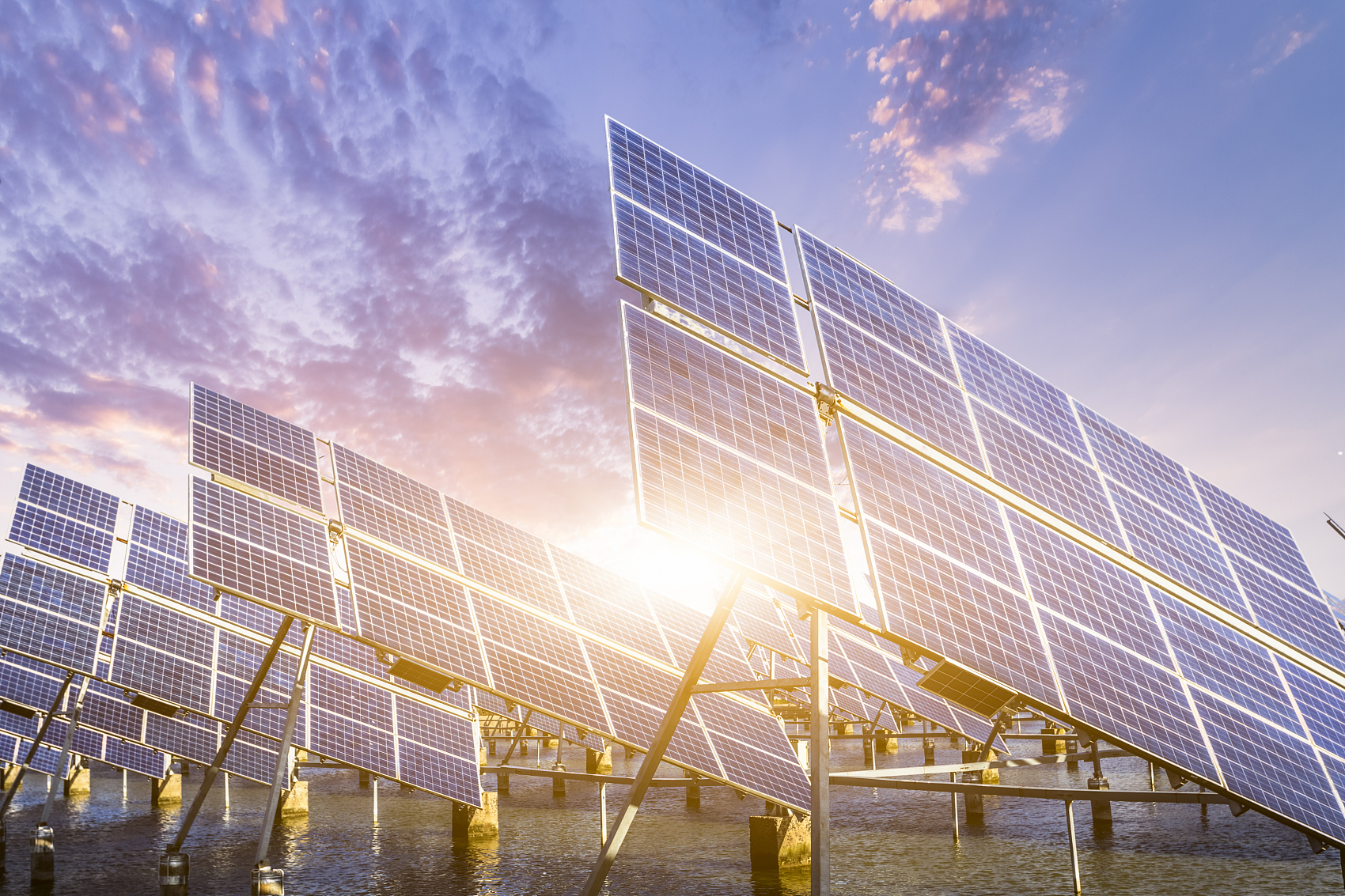
In modern solar asset management, the pyranometer is not optional—it is the cornerstone of intelligent solar power plant monitoring.
By transforming sunlight from an uncontrollable variable into a precise, measurable input, pyranometers enable accurate benchmarking, faster fault detection, and continuous photovoltaic efficiency optimization.
As the industry moves toward AI-driven predictive maintenance, digital twins, and tighter grid integration, the importance of high-quality irradiance data will only increase. Plants that invest in this foundational data layer today will be the ones that operate more reliably, profitably, and transparently tomorrow.
What are the uses of a rain gauge? Learn how rai
Learn how PAR sensors measure PPFD, optimize gro
Learn how soil EC sensors help optimize fertiliz
Contact: Molly
Phone: +86-17775769236
Tel: 86-0731-85117089
Email: molly@codasensor.com
Add: Building S5, Aux Square, Yuelu District, Changsha City, Hunan Province, China
We chat






 English


