Modern agriculture is facing increasing challenges such as unpredictable weather, water scarcity, rising production costs, and the need for higher crop yields. In this context, real-time environmental monitoring has become essential for efficient and sustainable farming.
An agricultural weather station is one of the core technologies supporting modern precision agriculture and smart farming systems.
An agricultural weather station is an integrated monitoring system designed to measure and record environmental conditions in farmland, greenhouses, orchards, vineyards, and other agricultural environments.
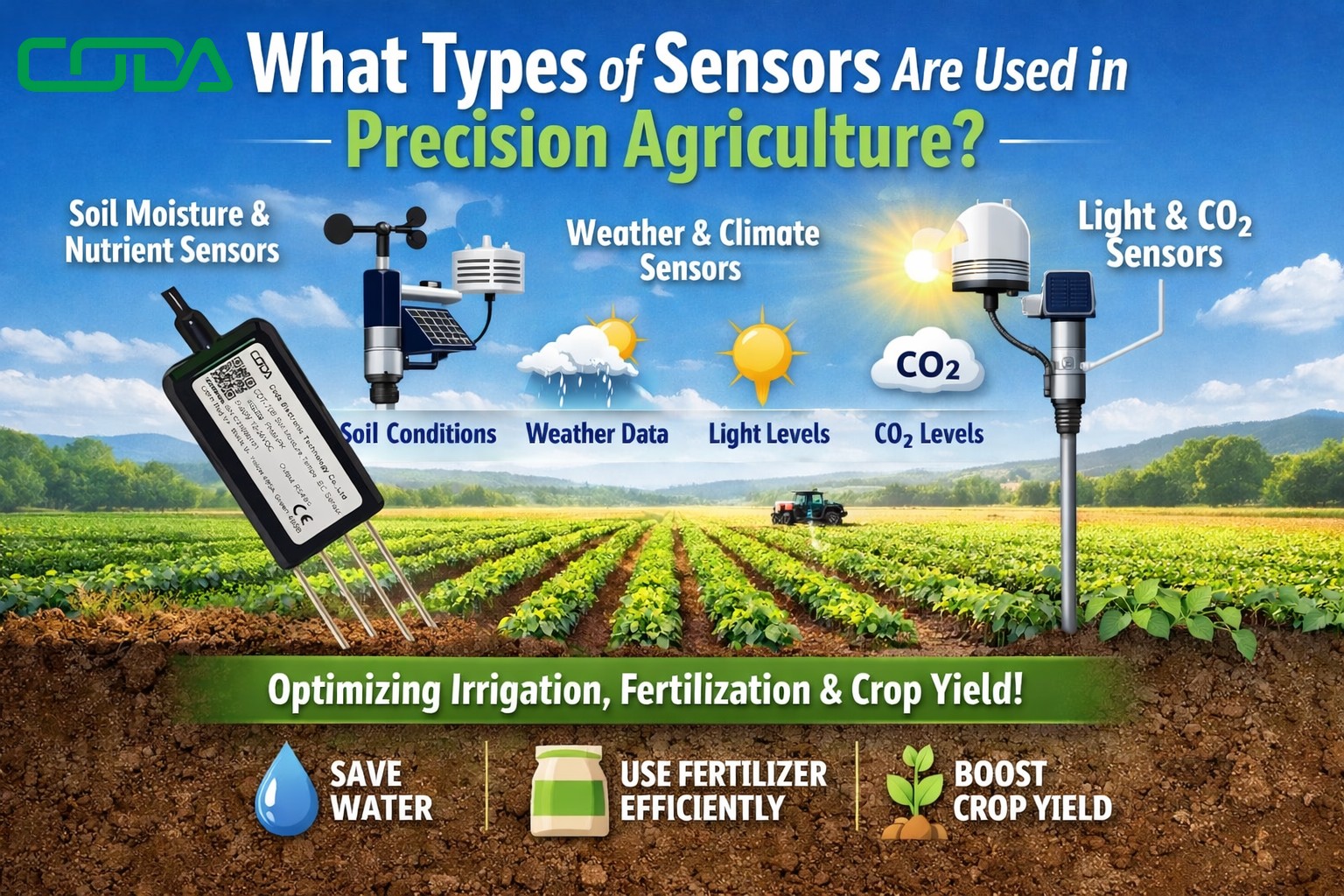
It continuously collects real-time data such as:
Air temperature and humidity
Rainfall
Solar radiation
Light intensity
Soil temperature
Soil moisture
Atmospheric pressure
The data is transmitted to a local display, data logger, or cloud platform for remote monitoring, analysis, and automation control.
In simple terms, an agricultural weather station acts as the “digital sensing system” of modern farming.
Traditional farming relies heavily on experience and manual observation. However, weather conditions can change rapidly, and inaccurate decisions may lead to crop loss or resource waste.
Agricultural weather stations solve this problem by providing continuous, accurate, and data-driven environmental insights.
They help farmers:
Improve crop yield and quality
Reduce irrigation water consumption
Prevent pest and disease risks
Optimize fertilizer application
Reduce labor costs
Enable smart greenhouse automation
Support precision agriculture decision-making
With real-time data, farming becomes more predictable, efficient, and scientific.
A complete agricultural weather monitoring system typically includes:
Environmental sensors for temperature, humidity, wind, rainfall, solar radiation, and light intensity.
Soil sensors for moisture, temperature, EC, and pH monitoring.
A data logger for automatic data collection and storage.
A communication system such as RS485, Modbus RTU, 4G, LoRa, or NB-IoT for data transmission.
A cloud platform or mobile application for remote access and analysis.
A solar power system for reliable operation in outdoor environments.
These components work together to form a stable and intelligent agricultural monitoring network.
Agricultural weather stations are widely used in modern smart farming systems and IoT-based agriculture solutions.
They can support:
Automatic irrigation control based on soil moisture and weather conditions
Greenhouse climate control including ventilation, heating, and shading
Pest and disease risk prediction using humidity and temperature trends
Fertilizer optimization based on environmental conditions
Remote farm monitoring through mobile devices and cloud platforms
Integration with AI-based agricultural decision systems
This enables farmers to move from traditional experience-based farming to data-driven precision agriculture.
A commercial tomato greenhouse integrated an agricultural weather station with soil moisture and light sensors.
Before installation, irrigation and ventilation were manually controlled, leading to water waste and unstable crop conditions.
After deployment, the system automatically adjusted irrigation and ventilation based on real-time data.
Results included:
Significant reduction in water usage
Improved crop uniformity
Increased overall yield
Reduced plant disease occurrence
A vineyard in a cold climate region used a weather station to monitor temperature, humidity, and wind conditions.
When temperature dropped below a critical threshold, the system triggered alerts and activated frost protection equipment.
This helped significantly reduce frost damage and improve grape quality during early spring seasons.
A large agricultural farm implemented a weather station combined with soil moisture sensors to optimize irrigation scheduling.
Instead of fixed irrigation cycles, watering was based on real-time environmental data.
As a result, the farm achieved:
Reduced water consumption
More uniform soil moisture distribution
Improved crop yield efficiency
Agricultural weather stations provide multiple advantages for modern farming operations:
They deliver real-time environmental monitoring with high accuracy.
They help reduce water and fertilizer waste through precise control.
They improve crop productivity and quality through optimized growing conditions.
They reduce labor costs by automating monitoring and control processes.
They support remote monitoring, allowing farmers to access data anytime and anywhere.
They enable intelligent farming systems powered by IoT and cloud technology.
When selecting a system, consider the following factors:
Crop type and farming environment, such as greenhouse, orchard, or open-field agriculture.
Required sensor types, including soil, weather, or radiation monitoring.
Communication method, such as 4G, LoRa, or wired RS485 systems.
Level of automation required, from basic monitoring to full smart control integration.
System scalability for future expansion and additional sensors.
A well-designed system should be stable, accurate, and adaptable to different agricultural environments.
It is used to monitor real-time environmental conditions such as temperature, humidity, rainfall, wind, and soil moisture to support smarter farming decisions.
Yes. Agricultural weather stations can be used in small farms, greenhouses, orchards, vineyards, and large-scale agricultural projects.
Yes. By monitoring soil moisture and weather conditions, irrigation can be optimized to avoid overwatering and improve water efficiency.
Yes. Most modern systems can integrate with irrigation systems, greenhouse climate control, and other agricultural automation equipment.
An agricultural weather station includes specialized sensors for farming applications, such as soil moisture, solar radiation, and crop-related environmental monitoring.
An agricultural weather station is a critical tool in modern precision agriculture. It transforms traditional farming into a data-driven, efficient, and intelligent system by providing accurate real-time environmental information.
From smart greenhouses to large-scale farmland, these systems help improve crop yield, reduce resource consumption, and support sustainable agricultural development.
As agriculture continues to evolve toward automation and digitalization, agricultural weather stations will play an increasingly important role in the future of global farming.
What are the uses of a rain gauge? Learn how rai
Learn how PAR sensors measure PPFD, optimize gro
Learn how soil EC sensors help optimize fertiliz
Contact: Molly
Phone: +86-17775769236
Tel: 86-0731-85117089
Email: molly@codasensor.com
Add: Building S5, Aux Square, Yuelu District, Changsha City, Hunan Province, China
We chat






 English


