For many years, agricultural decision-making relied heavily on sunshine duration—a simple measure of how long sunlight was available each day. While useful, sunshine hours alone cannot accurately reflect how crops respond to light.
Modern agriculture is now shifting toward precise solar radiation measurement, especially Photosynthetically Active Radiation (PAR). With professional solar radiation and PAR sensors from CODA Sensor, growers can move from experience-based farming to data-driven, precision agriculture, significantly improving productivity and resource efficiency.
Photosynthetically Active Radiation (PAR) refers to solar radiation in the 400–700 nm wavelength range, which plants use directly for photosynthesis. Unlike total solar radiation or sunshine duration, PAR provides a direct and scientific indicator of plant-usable light energy.
By deploying CODA Sensor solar radiation and PAR sensors, agricultural users can:
Accurately measure available light at crop canopy level
Identify light limitations during critical growth stages
Prevent crop stress caused by insufficient or excessive radiation
This precise understanding of radiation enables more reliable agronomic decisions.
In greenhouse environments, supplemental lighting is essential—but fixed lighting schedules often lead to energy waste.
When CODA Sensor PAR and solar radiation sensors are integrated into greenhouse control systems, growers can:
Automatically adjust supplemental lighting based on real radiation levels
Maintain the optimal Daily Light Integral (DLI) for each crop and growth phase
Reduce electricity consumption while ensuring consistent crop quality
Radiation-driven lighting control improves both crop performance and operational efficiency.
Solar radiation strongly influences crop evapotranspiration. High radiation levels increase plant water demand, even when temperatures appear moderate.
With real-time data from CODA Sensor solar radiation sensors, farmers can:
Adjust irrigation schedules dynamically during high-radiation periods
Prevent water stress and yield loss
Reduce over-irrigation and water waste
When combined with soil moisture and meteorological sensors, CODA’s radiation data supports precise and sustainable irrigation management.
Crop yield is closely related to cumulative radiation exposure during key development stages. Accurate radiation data allows growers to estimate biomass accumulation and production potential more reliably.
Using long-term monitoring data from CODA Sensor radiation measurement solutions, agricultural operators can:
Forecast yields earlier and more accurately
Analyze yield variability caused by light conditions
Support production planning and risk management
Radiation-based modeling provides a solid scientific foundation for modern agricultural management.
Different crops and varieties have unique radiation requirements. By analyzing historical and real-time data collected by CODA Sensor solar radiation and PAR sensors, farmers can:
Select crop varieties suited to local light conditions
Optimize planting density, orientation, and timing
Improve crop growth models and seasonal planning accuracy
This approach helps maximize land productivity while reducing unnecessary inputs.
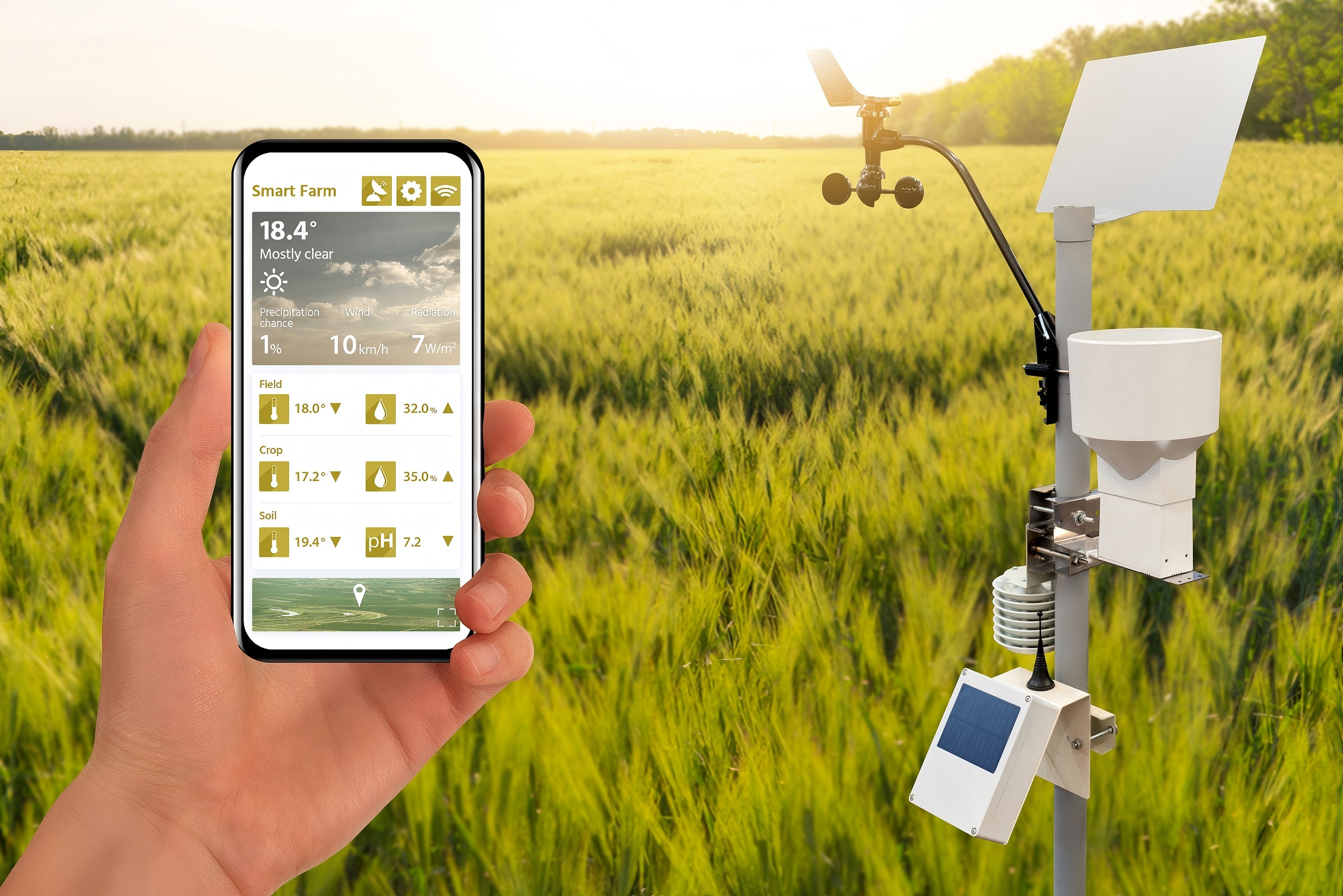
Solar radiation sensors are no longer simple monitoring instruments. With CODA Sensor’s professional solar radiation and PAR sensing solutions, radiation data becomes a core decision-making tool in smart agriculture.
By moving beyond sunshine hours and embracing precise radiation measurement, CODA Sensor helps agriculture achieve:
Higher and more stable yields
Improved energy and water efficiency
Data-driven, sustainable farming practices
In modern agriculture, understanding light means unlocking productivity—and CODA Sensor makes that possible.
What are the uses of a rain gauge? Learn how rai
Learn how PAR sensors measure PPFD, optimize gro
Learn how soil EC sensors help optimize fertiliz
Contact: Molly
Phone: +86-17775769236
Tel: 86-0731-85117089
Email: molly@codasensor.com
Add: Building S5, Aux Square, Yuelu District, Changsha City, Hunan Province, China
We chat






 English


